
Training in summer heat in Dubrovnik: when and how to do it
How to train through a Dubrovnik summer: the best time of day, heat adaptation, fluids and salt, outdoor running routes and the warning signs to watch for.
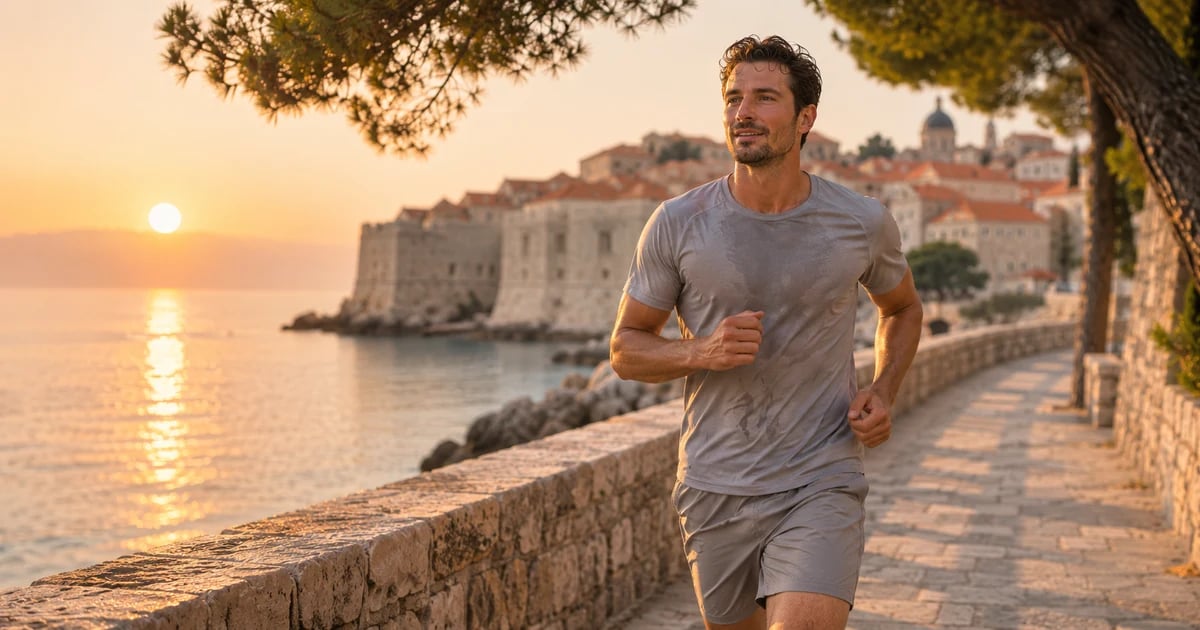
In a Dubrovnik summer, train early in the morning or in the evening, ease off the intensity for the first two weeks of heat, drink steadily all day and replace salt when you sweat heavily. Stop if you feel dizzy, sick, get a headache or feel confused. Your body needs about ten to fourteen days to adapt to heat.
Why the same workout feels much harder in summer
When it's hot and humid, your body spends part of its energy on cooling. Your heart beats faster at the same pace, you sweat more, and in humid air sweat evaporates poorly, so it cools you less. That's why a run that felt easy in April feels like a race in July. It isn't a loss of fitness, it's physiology. Dubrovnik summers also bring days of jugo, the humid southern wind, when the air feels heavy and the nights stay warm, so sleep suffers too.
I'm Elvis Agović, personal trainer at Grand Fit & Beauty in Dubrovnik. Every summer I train locals, seasonal staff and visitors on longer stays, and every year I see the same mistakes: training at noon, too little fluid and the same pace as in spring. All of it can be avoided with a little planning, whether you live here or you're just here for a few weeks.
What time of day is best for summer training
The rule is simple: the further from midday, the better. This is the rough guide I give my clients:
| Time of day | Good for | Note |
|---|---|---|
| Early morning, until about 9 am | Running, hill walks, harder sessions | Freshest air and the quietest streets |
| Late morning and midday | Only easy movement in the shade or indoor training | Strongest sun, avoid training outdoors |
| Evening, after sunset | Strength training, easy runs, mobility | Stone and asphalt keep radiating heat for hours |
| Late night | Light training or stretching | Hard sessions can make it harder to fall asleep |
If you work shifts and your only free slot is in the middle of the day, train indoors and keep it short. I explain how to fit training around a rota in training through the Dubrovnik season when you work shifts.
How your body adapts to heat
Heat adaptation takes roughly ten to fourteen days of regular exposure. During that time you start sweating earlier and more, your blood volume increases and your heart rate drops at the same effort. So the first weeks of June, or your first week here on holiday, are not the time for personal bests. This is what I recommend:
- In the first week of heat, cut session length or the number of sets by about a third.
- When running, go by how hard it feels, not by pace. Slower is completely fine.
- Rest longer between sets in the gym, especially on big lifts like squats and deadlifts.
- Bring the volume back gradually over two weeks as you feel better.
How much to drink and whether you need salt
There is no single number for everyone, because people differ a lot in how much they sweat. A practical rule is to drink steadily through the day, not all at once before training, and to aim for pale yellow urine. If you weigh yourself after a session and you've lost more than a kilogram, that's roughly a litre of fluid to replace.
For longer sessions, more than an hour with heavy sweating, it helps to replace salt as well as water, either with an electrolyte drink or simply a normal salty meal afterwards. Drinks the night before and coffee instead of water before a hot session are not a good mix. If you have blood pressure, heart or kidney issues, agree your fluid and salt intake with your doctor.
Running and walking outdoors in Dubrovnik
Dubrovnik is great for outdoor training if you get the timing right. The Lapad promenade and the trails up Mount Srđ are beautiful early in the morning, and the climb up Srđ is a serious workout for your legs and heart. In summer, start the Srđ hike at dawn, take water and don't count on shade, because the trail has almost none. The old town steps are perfect for intervals, but only once the streets empty out and the stone cools down.
Outdoors, wear light-coloured, light clothing, a cap and sunscreen, and pick running routes along the sea where there's at least a bit of breeze.
A warm night is part of training
In the heat you don't only recover during the day, you recover at night. When nights are warm, sleep is lighter and shorter, and fatigue adds up from day to day. Air the room early in the morning, keep it dark during the day and take a lukewarm shower in the evening. If you sleep badly several nights in a row, lower the intensity of your next session instead of pushing through. Training tired in the heat is the most common route to injury or exhaustion.
Warning signs you must not ignore
Heat exhaustion can turn into heat stroke quickly, and heat stroke is a medical emergency. Stop training straight away if you feel dizzy, sick, have a strong headache, cramps, an unusually fast pulse or confusion. Get into the shade, cool yourself with water and sip slowly. If someone is confused, stops sweating or passes out, call 112, the emergency number in Croatia and across the EU. This is general information, not medical advice. If you have a chronic condition or take medication, talk to your doctor about training in the heat.
Strength training in summer: what I change in the plan
Strength training copes with heat better than long cardio, but it still needs adjusting. In summer I keep the weights, cut the number of sets, lengthen rest periods and drop long circuits without breaks. If the goal is fat loss, I don't add cardio at noon. I add more walking early in the morning or in the evening instead. Recovery matters more than usual in summer, so for clients with a lot of training and work I also suggest a massage to release tight muscles.
How I can help
At Grand Fit & Beauty I adjust the training and nutrition plan to the season, your job and how the heat affects you. I coach in English and Croatian. If you want to get through the summer without losing fitness and without taking risks, come for a chat at Hotel Adria, Radnička ulica 46, or call +385 91 300 9911. Once summer is over, we move on to the winter plan I describe in the off-season training plan for Dubrovnik.
FAQ
- What is the best time to work out in hot weather?
- Early morning, until about 9 am, or in the evening after sunset. Around midday, train indoors or keep it to easy movement in the shade.
- How long does it take to adapt to training in the heat?
- Roughly ten to fourteen days of regular training in warm conditions. Cut session length or sets by about a third at first and build back up.
- Do I need electrolytes when training in summer?
- For shorter sessions water is usually enough. For sessions over an hour with heavy sweating, replace salt too, with an electrolyte drink or a salty meal.
- When should I stop exercising in the heat?
- Straight away if you feel dizzy, sick, have a strong headache, cramps or confusion. If someone passes out or stops sweating, call 112.